

Survivability & Vulnerability

The science and technology for remaining mission capable after a military engagement to avoid or survive a hostile threat (survivability of platforms and ability against specific threats). This subcategory comprises four elements: susceptibility, vulnerability, recoverability, and lethality.

Recent Inquiries

What current over-the-horizon logistical resupply technologies are available for aerial and maritime unmanned aerial systems?


What current over-the-horizon logistical resupply technologies are available for aerial and maritime unmanned aerial systems?
What is the difference in cost on a per-kilogram basis to lift cargo into low Earth orbit vs. geostationary Earth orbit?

What is the difference in cost on a per-kilogram basis to lift cargo into low Earth orbit vs. geostationary Earth orbit?

Inquiry_Default_6

How can someone access the Joint Radio Frequency Effectiveness Model?

How can someone access the Joint Radio Frequency Effectiveness Model?

Articles

hand-digital-id-square

DoD Adopts Standard for Human Readiness Levels

First created by NASA in the 1970s, the Technology Readiness Level (TRL) – which measures the progress of new technology from basic research to completion – was formalized in 1989. TRLs track both commercial and…

A team from the Naval Air Warfare Center Aircraft Division monitors data collected during an oxygen system contamination test to check for potential aircrew air impurities using the Navy’s new test rig called the Gaseous Injection Analyzer, or GaIA. The warfare center built the service’s singular test capability to verify modern oxygen systems effectively filter contaminants in compliance with today’s military standards in partnership with Johns Hopkins University. (U.S. Navy photo by Todd Frantom)

Aircrew Safety Improved With New Oxygen Purity Test at NAWCAD

NAVAL AIR WARFARE CENTER AIRCRAFT DIVISION, Patuxent River, Md. – For the first time, the Navy can precisely test how well modern oxygen systems remove impurities to ensure safe air for aircrew following a successful…

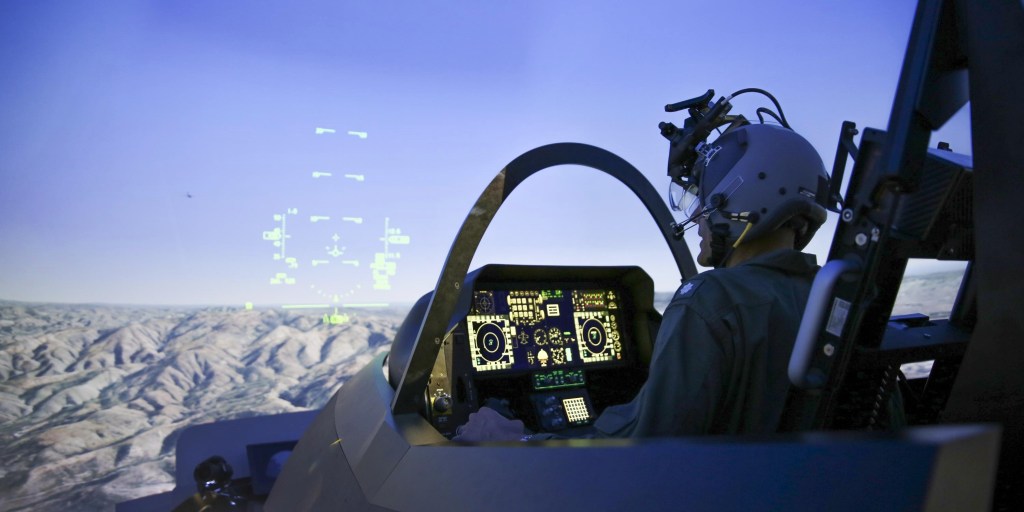
A pilot trains in the Joint Simulation Environment (JSE) at the Naval Air Warfare Center Aircraft Division in Patuxent River, Md. Tactical pilots from the Marine Corps and Air Force conducted the first-ever joint training exercise flying simulated combat missions together in F-35 and F-22 fifth-generation fighter jets in the JSE on March 24-27, 2024. (U.S. Navy photo by Terri Thomas)

Marines, Air Force Fight as a Joint Force for the First Time in the Navy’s Joint Simulation Environment

NAVAL AIR WARFARE CENTER AIRCRAFT DIVISION, Patuxent River, Md. — For the first time, U.S. Marine Corps F-35 and Air Force F-22 pilots trained as a joint fighting force in the Naval Air Warfare Center…

Webinars

drone flying in the sky at dusk

Automated/Autonomous Impacts Routing – Path Optimization Through Adverse Atmospheric Effects and Obstacles

Automated Impacts Routing (AIR) is a software system that uses a modified version of the A* algorithm by including environmental (atmosphere/terrain) effects coupled with shortest path calculations. It allows best and second-best path solutions as…

Many tiny fibers twisted together into one larger strand

Computational Tools to Predict the Response of UHMWPE Composites to Impact

Ultra-high, molecular weight polyethylene (UHMWPE) composites are advanced materials that lack experimentally driven, physics-based computational tools for predicting their response. This challenge exists for traditional fiber-based UHMWPE composites in a softer matrix material, as well…

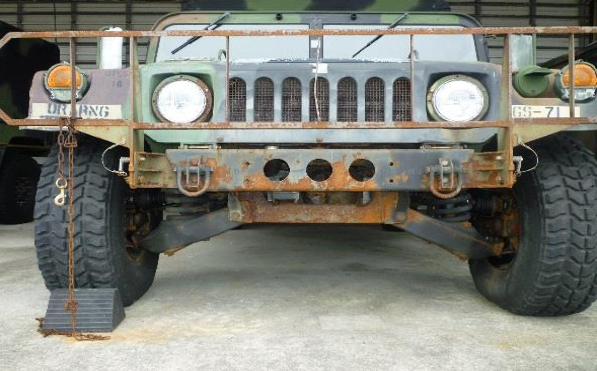
A rusted and corroded military ground vehicle is shown

The Effects of Corrosion on Ballistic Protection of Armor and Methods to Prevent and Treat Corrosion in Armored Vehicles

The Defensive Equipment and Armored Vehicle Division (DEAV) of the Department of State (DoS) has seen repeated and extensive corrosion on armored vehicles (AVs) at various posts, affecting both armor and original equipment manufacturer (OEM)…

Events

A U.S. Air Force F-35A Lightning II assigned to the F-35A Lightning II Demonstration Team performs a practice aerial demonstration

Threat Weapons & Effects (TWE) Training 2026

This annual training event is a collaborative effort and draws information from threat exploitation, live fire testing, and combat experience to provide a complete picture of threat lethality.

Raptor Refuels over Fairchild

Joint Aircraft Survivability Program (JASP) Model Users Meeting (JMUM) 2026

The purpose of this recurring meeting is to provide model users, managers, stakeholders, and other interested individuals with the latest information regarding JASP-sponsored modeling and simulation (M&S) tools, as well as others, used by the aircraft survivability community to evaluate aircraft performance in realistic threat environments.

Blue Angels Super Hornet Training

Aircraft Combat Survivability Short Course (ACSSC) 2026

DSIAC is pleased to announce that the next Aircraft Combat Survivability Short Course will be held 2-4 June 2026 at Pratt & Whitney in East Hartford, CT. This three-day short course in aircraft combat survivability…